
The Friends' Failed Consolation
Book of JobThis thread traces how three visitors begin in shared grief but turn their concern into increasingly rigid accusations and finally receive God's rebuke.
increasing Bearing strength in each event
 decreasing
Bearing strength in each eventdecreasingA Shared Vigil
A Shared Vigil
Presence
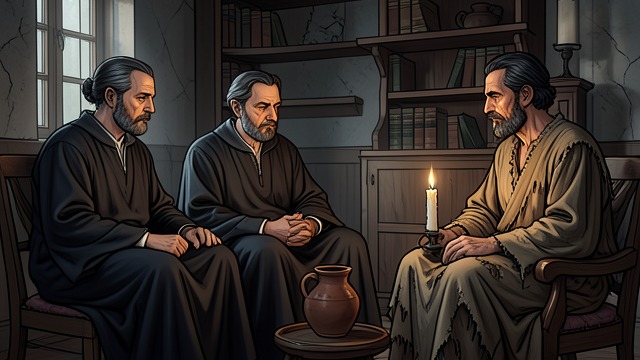
Eliphaz, Bildad, and Zophar see Job's condition, weep, and sit silently beside him for seven days and nights.
Compassion
Their initial response meets grief without explanation. This pause presents a kind of companionship their later speeches fail to sustain.
Eliphaz's Moral Lesson

Eliphaz's Moral Lesson
Reassurance Offered
Eliphaz argues that the innocent do not perish and urges Job to regard suffering as correction.
Consolation Turns
The advice assumes that Job's pain proves a moral cause. What sounds like encouragement therefore becomes an implicit charge.
Bildad Invokes Tradition
Bildad Invokes Tradition
Appeal to Ancestors
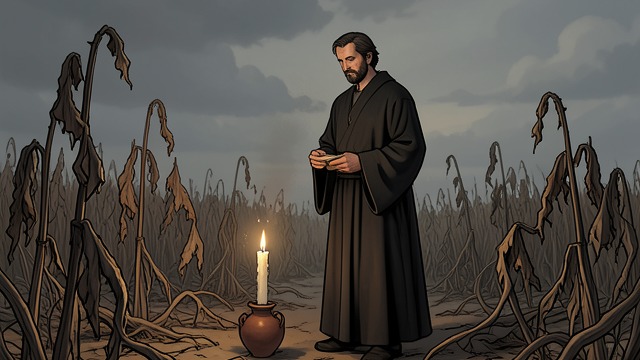
Bildad tells Job to consult earlier generations and compares forgotten people to plants that wither without water.
Implication
He suggests that Job's children suffered for their own transgressions. The inherited rule leaves little room for compassion or uncertainty.
Zophar's Harsh Rebuke

Zophar's Harsh Rebuke
Condemnation
Zophar accuses Job of empty talk and claims that God has punished him less than he deserves.
Breakdown
The language narrows the distance between disagreement and insult. Job's friends cease to function as comforters and become participants in his distress.
Divine Rebuke
Divine Rebuke
Judgment
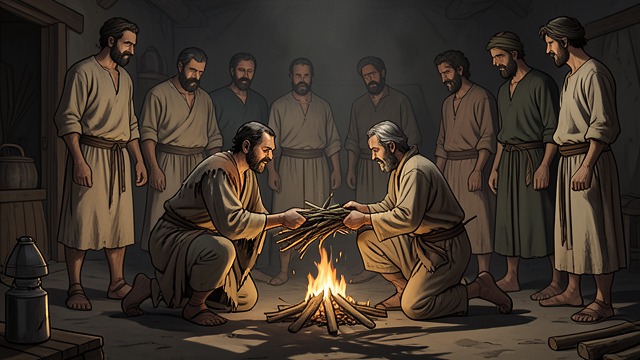
God tells Eliphaz and his companions that they have not spoken rightly and orders them to offer sacrifices.
Reversal
Job must pray for them, reversing their earlier posture as supposed teachers. Their confident defense of God proves less faithful than Job's honest protest.
The first week after their arrival
At the first round of speeches
After Job's first answer
During the next cycle of speeches
After Job's encounter with God
